
Ventures
Investments in science-driven industrial renewal.
Through venture-capital investments in disruptive companies at the frontier of science and technology, we help transform pioneering research into resilient businesses.
Capital, network and experience to turn scientific spinoffs into global success stories.
We invest early across the Nordics in science-driven companies with the potential to disrupt industries. We partner with entrepreneurs that combine scientific excellence with strong business acumen, to transform promising academic spinouts into new global leaders.
Underpinned by our thesis of science-driven industrial renewal, we invest across the scientific frontiers redefining how we understand life, shape the physical world and advance computing. Our investments span breakthrough technologies from AI, quantum and advanced computing to novel materials, nanotechnology, bio-innovation and data-driven life science.
Our team extends beyond a core of venture capitalists, drawing on a strong advisory network of entrepreneurs, industrial leaders and scientists with first-hand experience of taking breakthrough technologies from research to commercial scale.
- Typical initial investment (MSEK)
- 1–50
- Portfolio companies
- 35
- New investments 2026
- +6
Portfolio - Ventures
AlixLabs
Semiconductor equipment manufacturer enabling further downscaling of transistors, while improving cost and environmental parameters of its manufacturing.
Year of investment
2023
Registered office
Lund, Sweden
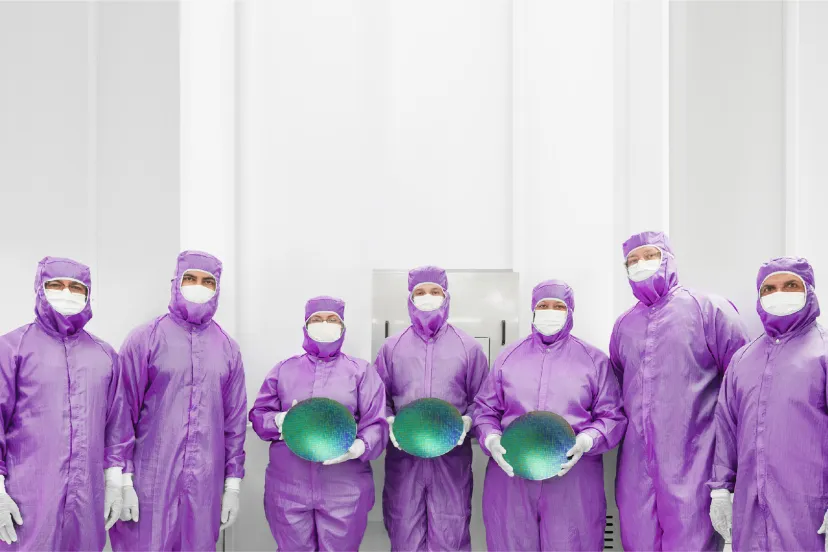
The scaling of semiconductor technology has been one of the fundamental drivers of the digital economy. Yet as advanced chips become increasingly complex, the cost, energy consumption, and manufacturing complexity required to continue shrinking feature sizes are rising at an unsustainable pace. The industry is facing a critical challenge: how to keep advancing performance while reducing the economic and environmental burden of production.
AlixLabs has developed a breakthrough solution to this problem through its proprietary APS (Atomic Pitch Splitting) technology. Built on years of research in atomic layer etching and commercialized from Lund University, APS enables semiconductor manufacturers to create extremely fine structures with fewer process steps, lower energy consumption, reduced emissions, and significantly lower capital requirements compared to conventional approaches. The technology offers performance comparable to today’s most advanced lithography-based manufacturing methods while promising a fundamentally more efficient production process.
We invested in AlixLabs because we believe APS represents a rare opportunity to redefine a core manufacturing process in one of the world’s most important industries. By making advanced semiconductor production more accessible, cost-efficient, and sustainable, AlixLabs has the potential to become a key enabler of the next generation of computing technologies.
- Investment manager
- Alex Basu

Arevo
Based on fundamental research on plant nutrient uptake, Arevo has developed climate smart amino acid fertilizer technologies for faster and better plant establishment.
Year of investment
2017
Registered office
Umeå, Sweden
More than a century ago, the Haber-Bosch process for producing synthetic fertilizers became one of the most important innovations of the modern era, helping feed billions of people and underpinning global agricultural productivity.
Like many technologies born during the industrial age, however, the process was not designed with sustainability in mind. Today, ammonia production accounts for approximately 1% of global energy consumption and 1.4% of global CO₂ emissions. Conventional nitrogen fertilizers are also a major contributor to nutrient leakage and eutrophication, making agriculture increasingly dependent on an environmentally costly technology developed more than a century ago.
Prof. Torgny Näsholm at Swedish University of Agricultural Sciences has dedicated his career to studying plant nutrient uptake. His studies showed nutritional inefficiencies of ammonia-based fertilizers and demonstrated that plants can efficiently utilize amino acids as a nutrient source, having evidence for a fundamentally different approach to fertilization. By leveraging these biological mechanisms, nutrient efficiency and crop yields can be improved while reducing reliance on traditional fertilizers.
Based on this scientific foundation, Arevo was founded to bring amino acid-based plant nutrition to market. The company has demonstrated superior plant growth, stronger roots and healthier crops compared to solely using conventional solutions, while significantly reducing nutrient leakage into soil and waterways. Through synthetic biology, Arevo can also produce its nutrients through a scalable and sustainable manufacturing process.
We believe Arevo is redefining one of the world's largest and most important industries. By combining deep biological insight with scalable production technology, the company has the potential to improve food production while reducing agriculture's environmental footprint. A scientific breakthrough with the potential to reshape how the world grows food.
- Investment manager
- Diana Heningsson


Elypta
Metabolism-based liquid biopsy for early detection of various forms of cancer.
Year of investment
2017
Registered office
Stockholm, Sweden
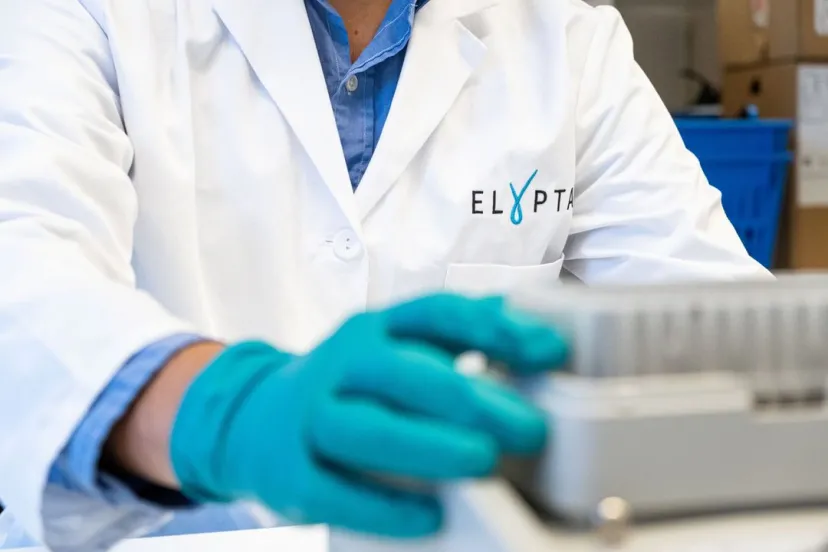
The central dogma outlines the different “levels of programming” of biology. DNA instructs the synthesis of RNA, which instructs the synthesis of proteins, which ultimately affect the behaviour of biochemical and cellular processes; processes that makes our body tick – or in some cases – not tick. In this context, the metabolome represents the end-products of all such biochemical and cellular processes. Now, in the context of data driven life science, the metabolome could be seen as another data source (in addition the genome, proteome and transcriptome) that describes the complex biological state of a patient.
Within the scientific field of metabolomics, glycosaminoglycans (GAGs) found in biofluids have been hypothesised as a viable biomarker for cancer: By detecting free cancer associated GAGs, one should be able to diagnose cancer.
Elypta is working with that hypothesis to built a novel metabolic-based approach to cancer detection, packaged in a technology platform for liquid biopsy tests. If successful, the technology has the potential to be a data driven disruption to healthcare.
- Investment manager
- Elin Almstedt
EnginZyme
Metabolism-based liquid biopsy for early detection of various forms of cancer.
Year of investment
2022
Registered office
Stockholm, Sweden
The central dogma outlines the different “levels of programming” of biology. DNA instructs the synthesis of RNA, which instructs the synthesis of proteins, which ultimately affect the behaviour of biochemical and cellular processes; processes that makes our body tick – or in some cases – not tick. In this context, the metabolome represents the end-products of all such biochemical and cellular processes. Now, in the context of data driven life science, the metabolome could be seen as another data source (in addition the genome, proteome and transcriptome) that describes the complex biological state of a patient.
Within the scientific field of metabolomics, glycosaminoglycans (GAGs, biomolecules centrally involved in cancer) found in biofluids have been hypothesised as a viable biomarker for cancer: By detecting free cancer associated GAGs, one should be able to diagnose cancer.
Elypta took that hypothesis and built a novel metabolic-based approach to cancer detection, packaged in a technology platform for liquid biopsy. In studies they’ve outperformed genomic and proteomic approaches and proven a viable pathway to multi-cancer detection. A potential gold standard for early-stage cancer detection. A data driven disruption to healthcare.
- Investment manager
- Gustav Notander


Interspectral
Transforming data into insights and efficient production in additive manufacturing.
Year of investment
2024
Registered office
Norrköping, Sweden
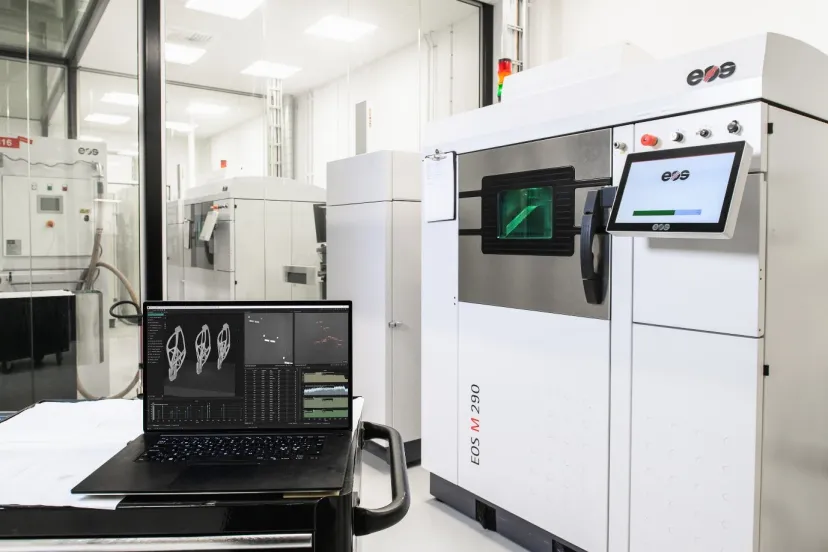
The industrial possibilities of additive manufacturing are vast, from being able to manufacture complex components that traditional manufacturing methods cannot handle, to small-scale production of unique components and large-scale industrial adoption.
For additive manufacturing to be of wide use the production speed needs to increase, and quality assurance needs to be more efficient. Quality assurance is estimated to account for a significant part of the costs in additive manufacturing and is a bottleneck today that leads to long manufacturing and development cycles.
3D printers generate enormous amounts of data, but only fragments of this are currently utilized in analysis and quality assurance processes. Interspectral offers advanced tooling and AI solutions to manage, aggregate, interpret and present the huge amounts of data in an efficient and useful way. Visualization of data, AI tooling and efficient data management in industry is only in its infancy and we are excited to support Interspectral in spearheading this important area.
- Board representation from Wallenberg Investments
- Gustav Notander

Intui
Intui is creating a path towards continuous self-learning AI systems based on decades of research in neuroscience, opening an alternative way to truly autonomous robots and digital systems in dynamic environments.
Year of investment
2023
Registered office
Stockholm, Sweden
Intu is based on decades of research in neuroscience, opening an alternative way to truly autonomous robots and digital systems.
Many important AI advancements were inspired by neuroscience – the way in which we build AI has been guided and inspired by how the brain’s memory functions, to mention one example. The emerging field of NeuroAI is at the intersection of neuroscience and AI – mapping fundamental elements of what intelligence consists of, enabling a potential next big leap in AI. AI, as we know it today, has limitations such as time-consuming training, a need for vast amounts of data, the constant re-training and the lack of intuitive self-learning patterns. The AI in an autonomous vehicle with today’s technology becomes static for these reasons, while ideally the control system would have a higher level of agency in order to be able to generalize and apply learning from one situation to another.
Intuicell, born from research at Lund University, has created a technology mimicking the brain’s plasticity, creating and shutting down connections between neurons and allowing for self-learning and adaptation to the system and environment. Their method is very computationally efficient, allowing for continuous learning in real time. The algorithms at Intuicell differ from existing AI algorithms in how they are trained – opening for a new variety of applications in signal processing, robotic control and
real-time industrial automation.
Through our investment in Intuicell, we contribute to creating the next generation of AI.
- Board representation from Wallenberg Investments
- Gustav Notander


NFA
Based on cutting-edge research in AI, robotics and machine perception, NFA
develops machine perception and automation technologies that enable the next
generation of intelligent forestry machines.
Year of investment
2024
Registered office
Lund, Sweden
The automation of physical work is one of the largest present opportunities in AI. While machine perception, computer vision and autonomous systems are transforming industries such as automotive, logistics and mining, forestry remains heavily dependent on manual decision-making. Forestry machines operate in some of the most challenging environments for AI: unstructured terrain, limited visibility, unreliable positioning signals and highly variable operating conditions.
Nordic Forestry Automation (NFA), founded by researchers from the Wallenberg AI, Autonomous Systems and Software Program, is building the perception and automation stack for the future of forestry.
Succeeding in physical AI requires both exceptional talent and access to large-scale real-world training data. NFA is uniquely positioned on both fronts, combining leading expertise in machine perception, AI, and robotics with a rapidly growing fleet data platform powered by operational forestry machines in production environments.
NFA has adopted a staged approach where each product generation delivers immediate customer value while building the technological foundation for higher levels of automation. This strategy allows the company to commercialize early, collect large-scale real-world data and continuously improve its models, positioning NFA at the forefront of physical AI in forestry.
With our investment in Nordic Forestry Automation, we are backing the company that will enable the next generation of intelligent forestry machines.
- Investment manager
- Diana Heningsson


Pixelgen
Offers a molecular assay to study the surface proteome of single cells, which is used to inform scientist on basic immunological function and on the mode of action of novel drugs.
Year of investment
2022
Registered office
Stockholm, Sweden
Unwrapping the molecular understanding of human biology has been in the focus of biotechnology for decades. It has generated vast advances in fields like proteomics that in in turn has contributed to new therapeutics and other health care improvements. For a long time, the approach to unwrapping the molecular system of human biology and physiology has been limited by the tools available to study the biomolecules of the body. One by one, or two by two, molecules and molecular interactions have been characterized and mapped into a system.
Spatial biology is a novel field with the aim to capture the spatial context of biology, in order to understand how molecular interactions on a broader scale affect biological function and dysfunction. Spatial biologists typically rely on optical methods to create biological contextualization. However, resolution limitations is making it impossible to zoom in past tissues and cells without losing multiplexity. And if multiplexing goes, so does the biological context. Thus, the system of molecules, like the proteome, has been out of reach for spatial biologists.
Team Pixelgen, consisting of scientists turned entrepreneurs, has spent years contributing to life science with molecular tool innovations through successful firms like Olink, Vanadis, Halo Genomics and 10x Genomics. Frustrated by the limitation of optical methods, they invented a new technology to study molecular biology: molecular pixelation. With molecular pixelation, researchers across academia and industry are able to create data rich digital twins of the cellular proteome, which effectively unlocks spatial proteomics. And with that a new avenue to data driven drug discovery and novel diagnostics is opened.
Ultimately, we invested in Pixelgen because we are convinced their technology and team will enable a new frontier of life science innovation.
- Investment manager
- Alex Basu

Profundus
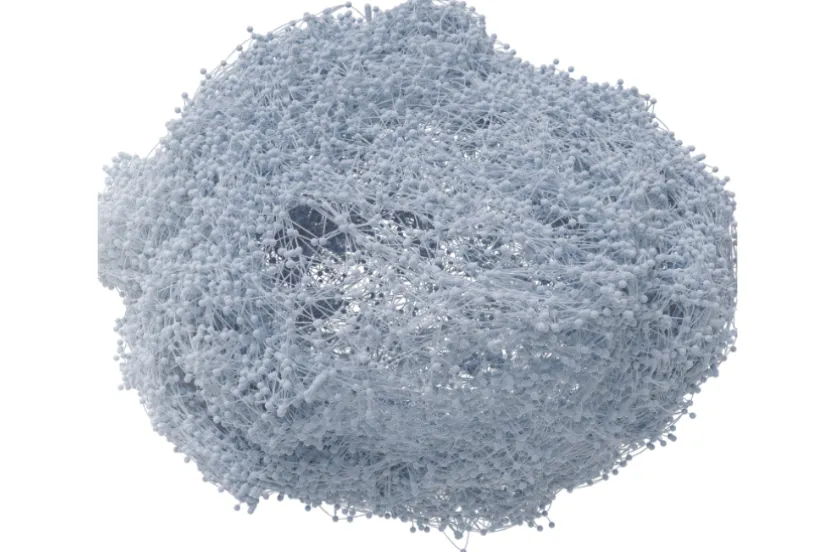
Using adaptive optics for retinal imaging, Profundus enables the imaging of currently not detectable retinal features, paving the way for research, early diagnosis, prevention, and treatment of various eye diseases.
Year of investment
2024
Registered office
Gothenburg, Sweden
Optical instruments have been used since the early 1900s to study eye biology and diagnose diseases. The eye, often referred to as "the window into the brain," is a part of the nervous system and many diseases, not just eye diseases, leave traces on the retina.
However, much of the biological information present on the retina remains underutilized due to the lack of high-resolution cameras capable of capturing in vivo images. Traditional optical instruments cannot capture wide-field and high-resolution images of the retina due to wavefront aberrations caused by the eye's optics.
Profundus has addressed this challenge by adopting technology from advanced telescopes to develop a retinal camera that captures cellular-level data. This innovation has the potential to significantly enhance image analysis of in-vivo tissue, improving the evaluation of clinical pathways for patients, as well as monitoring disease development and treatment effectiveness.
- Investment manager
- Diana Heningsson


Rarity Bioscience
Develops technology for ultrasensitive and multiplexed detection of nucleic acid sequences through flow cytometry.
Year of investment
2022
Registered office
Uppsala, Sweden
Genomics has become key to modern health care, driving the frontier of clinical research, diagnostics and therapeutics for genetic and epigenetic diseases. In order to fully utilize the potential of genomics to serve unmet medical needs, novel genomic tools are required to increase the analysis throughput and accuracy.
Rarity Biosciences has developed a technology called SuperRCA that delivers an ultrasensitive and multiplexed capacity to detect rare nucleic acid sequences in biological samples. It works by amplifying the target nucleic acid sequences into DNA-macromolecules, which are easily detected through flow cytometry and other clinically available readout methods. In essence, with the SuperRCA technology, molecular is made macromolecular – an extremely powerful value proposition that we foresee will create multiple opportunities to improve health care, starting with applications within cancer research and care.
- Board representation from Wallenberg Investments
- Alex Basu


Scaleout Systems
Scaleout has developed infrastructure for federated learning and continuous edge AI, enabling organizations to deploy, update, and continuously improve machine learning models across distributed systems while keeping data local.
Year of investment
2023
Registered office
Uppsala, Sweden
The rise of AI is fundamentally changing how value is created across industries. At the same time, an increasing share of the world’s most valuable data is generated outside traditional data centres, in vehicles, industrial systems, connected devices and security-critical environments. While AI performance improves with access to more data, concerns around privacy, security, regulation and data ownership are making it increasingly difficult to centralise and share information. This creates a growing need for a new generation of AI infrastructure where models can learn from distributed data without moving it.
Scaleout Systems, born out of research at Uppsala University, is building software that enables federated machine learning and edge AI at. Rather than bringing data to a central model, Scaleout allows organisations to train AI directly where the data resides, preserving privacy, ownership and security while continuously improving model performance. The platform is designed to operate across cloud, on-premise and edge environments, making it applicable in industries such as automotive, and defence.
Scaleout combines deep technical expertise with a product-first approach and has already demonstrated traction with leading industrial and defence customers. Positioned at the intersection of AI, edge computing and data sovereignty, the company is building critical infrastructure for the next generation of intelligent systems.
- Investment manager
- Diana Heningsson


SweGaN
Semiconductor manufacturer that develops and produces Gallium Nitride on Silicon Carbide (GaN-on-SiC) epitaxial wafers.
Year of investment
2024
Registered office
Linköping, Sweden
The development of new radio frequency technology for communication, defense, and power components for energy systems hinges on ever-improving semiconductor performance. There is now a demand for transistors made from materials that can withstand higher operating parameters—such as frequency, voltage, and temperature—beyond the limits of silicon. Industry focus is shifting to a third generation of semiconductor materials, particularly silicon carbide (SiC) and gallium nitride (GaN), alongside various combinations and modifications. While these materials have been under development for decades, large-scale adoption has been hindered by quality and scalability issues, impacting cost and applicability.
Founded in 2014 by a research team from Linköping University, SweGaN is industrialising a novel GaN/SiC material structure and manufacturing process that offers superior properties and more efficient production compared to competitors. SweGaN’s advancements are key to enabling the large-scale use of these materials, and experts have recognized the company as "the best in Europe" for new GaN technology.
By investing in SweGaN, Navigare supports the establishment of a leading European supplier of next-generation semiconductors, vital for maintaining industrial competitiveness across multiple sectors.
- Investment manager
- Alex Basu


TERASi
High-performance wireless communication technology enabling secure, resilient and ultra-fast connectivity for defense, telecom and space applications.
Year of investment
2023
Registered office
Stockholm, Sweden
Modern societies and defense capabilities depend on uninterrupted access to information. Yet recent geopolitical developments and natural disasters have shown how vulnerable traditional communications infrastructure can be. Satellites can be jammed, GPS signals can be spoofed, fixed networks can be disrupted, and radio spectrum is becoming an increasingly contested domain. At the same time, autonomous systems, sensors, drones and distributed operations are generating unprecedented volumes of data that must be transmitted securely and in real time.
Founded on research from KTH Royal Institute of Technology, TERASi has developed a proprietary technology platform that allows high-frequency radio components and systems to be manufactured in silicon with exceptional performance, compact form factors and low power consumption. By combining novel semiconductor packaging, advanced RF engineering and proprietary manufacturing methods, TERASi addresses some of the most fundamental bottlenecks preventing widespread adoption of high-frequency wireless networks.
We invested in TERASi because we believe resilient connectivity will become a defining capability for both the digital and physical infrastructure of the future. By combining world-class deep technology, strong intellectual property and an ambitious team with the ability to execute, TERASi has the potential to become a leading European platform company within next-generation wireless communications.
- Investment manager
- Gustav Notander


Portfolio - Discovery
AdamantQ
Diamond electronics for navigation and related applications
Year of investment
2023
Registered office
Malmö, Sweden

Amylonix
Affibody-based therapeutics for neurological diseases
Year of investment
2022
Headquarters
Stockholm, Sweden
- Investment manager
- Elin Almstedt

Arkeon
Post-fabrication tuning for scalable superconducting qubits
Year of investment
2026
Registered office
Göteborg, Sweden

Basic Genomics
Research tools for RNA science
Year of investment
2025
Registered office
Stockholm, Sweden

Blykalla
Lead-cooled small modular reactors
Year of investment
2022
Registered office
Stockholm, Sweden

DapplerLabs
Metrology for semiconductor manufacturing
Year of investment
2025
Registered office
Stockholm, Sweden


FMQ Technologies
Real-time communication for connected machines
Year of investment
2025
Registered office
Stockholm, Sweden

Ligna Energy
Organic energy storage solutions
Year of investment
2018
Registered office
Norrköping, Sweden

LunaLEC
Light-absorbing printable electrochemical cells
Year of investment
2025
Registered office
Umeå, Sweden

OrbDB
AI-driven database technology for graph databases
Year of investment
2026
Registered office
Stockholm, Sweden
ProteomEdge
Protein quantification in blood samples for diagnostics and research
Year of investment
2025
Registered office
Stockholm, Sweden

QET
Superconducting microwave components for quantum technology
Year of investment
2025
Registered office
Göteborg, Sweden

Repli5
Synthetic data for vision-based systems
Year of investment
2021
Registered office
Göteborg, Sweden

Retain
Biomimetic filter membranes for water purification
Year of investment
2023
Registered office
Göteborg, Sweden

RiACT
Software for industrial robotic automation
Year of investment
2021
Registered office
Köpenhamn, Denmark

ScandiBio Therapeutics
Data-driven therapeutics company focused on dementia and metabolism
Year of investment
2018
Registered office
Stockholm, Sweden

ScandiEdge Therapeutics
Data driven pharmaceutical platform
Year of investment
2018
Registered office
Stockholm

Solinide Photonics
Photonics for next-generation optical communications
Year of investment
2023
Registered office
Göteborg, Sweden

SPARS IT
Data compression and rendering tools
Year of investment
2023
Registered office
Norrköping, Sweden

Westra Materials
Sustainable energy materials.
Year of investment
2022
Registered office
Norrköping, Sweden

Zytox Therapeutics
Affibody-based targeted cancer therapies.
Year of investment
2023
Registered office
Stockholm, Sweden

Team

Alex Basu
Head of Ventures

Diana Henningson
Investment Manager
Elin Almstedt
Principal

Gustav Notander
Investment Manager

Jenny Lindgren
Head of Portfolio Management & Operations

Michelle Nilsson
Executive Assistant
Investment units


